

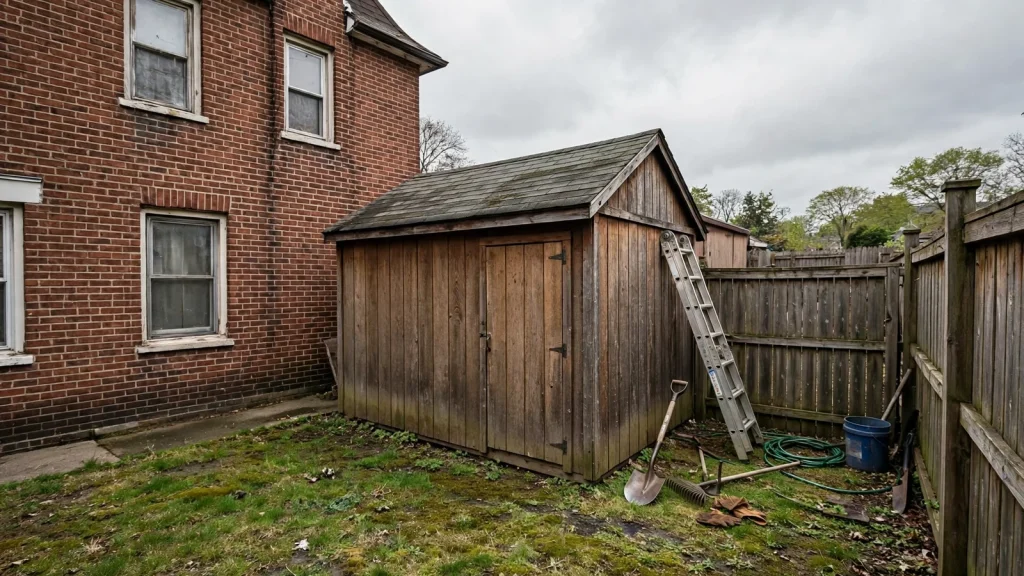
Earlier this week, a homeowner in Jamaica called our team with a problem he did not expect. He had built a shed on the side of his house, and a letter had arrived from New York City telling him the structure needed corrective action. The letter said it was not a violation, at least not yet. His first question was a practical one: can I hire a contractor to get me a permit for a shed that is already built? We talked it through, connected him with an expediter our team works with, and we are visiting the property this week to see the shed in person. His questions are ones we hear from homeowners all over Queens, so here are the answers, the same ones we gave him.
Quick Answers
Does a backyard shed in NYC need a permit?
Sometimes no. A small storage shed at a one or two family home needs no permit if it passes all five tests set by the Department of Buildings. Fail any one of them and the shed needs a filing with the city.
What are the five tests?
The shed is 120 square feet or less, no more than 7 feet 6 inches tall, at least 3 feet from every property line, not blocking a window the home needs for light and air, and the only shed on the lot.
Can a contractor get the permit for a shed that is already built?
Not on his own. Legalizing a structure starts with plans filed by a licensed architect or engineer. A contractor does the physical work, and an expediter can manage the paperwork and the appointments, but the filing itself belongs to the design professional.
What happens if you ignore the letter?
A request for corrective action is the inexpensive stage. Ignored, it can become a formal violation for work done without a permit, with civil penalties, a hearing process, and an open record on the property that can stall a sale or a refinance.
Free Home Valuation
Request a free home valuation from one of our local Queens real estate experts.
When a Shed Needs No Permit at All
The Department of Buildings rule, 1 RCNY 101-14, exempts a small shed at a one or two family home from permits when every one of these conditions is met:
- It covers no more than 120 square feet.
- It stands no more than 7 feet 6 inches tall.
- It sits at least 3 feet from every lot line.
- It does not obstruct any window the home is required to have.
- It is used for storing normal household goods and tools, and it is the only shed on the tax lot.
The rule describes the shed it has in mind: temporary, portable, and freestanding. Think of the classic store bought storage shed placed in the yard, not a structure built into the property. One more caution that matters: a permit exemption is not a zoning exemption. The rule itself does not authorize anything that violates the Zoning Resolution, which brings us to the part that surprises most homeowners.
When You Do Need a Permit
Your shed needs a Department of Buildings filing if it misses any of the five tests. The common misses are a shed that is bigger than 120 square feet, taller than 7 feet 6 inches, or closer than 3 feet to a property line. A shed attached to the house, or set on a permanent foundation, also falls outside the exemption, because it is no longer temporary and portable. A second shed on the same lot needs a filing too. And if you later run power or plumbing to a shed, that work needs its own permits filed by licensed trades, even when the shed itself needed none.
The Zoning Problem: Sheds Belong in the Rear Yard
Here is the part nobody mentions at the home improvement store. Zoning treats a shed as something that belongs in the rear yard. The Zoning Resolution expressly allows sheds in a required rear yard, up to 10 feet above the level of that yard. A required side yard carries no such allowance. Side yards are exactly where many homeowners place a shed, because the space looks unused and the shed fits neatly against the house. That placement is also the hardest to legalize where it stands. When a side yard shed draws a letter, the honest options are usually to move it to the rear yard, shrink or shift it until it passes all five tests and sits where zoning allows, or remove it. An architect or expediter can tell you which option your lot actually permits before you spend money on the wrong one.
Got a Letter or a Violation? Do This First
- Read the whole letter, and find the deadline and any reference numbers. Everything else in the process runs off those dates.
- Do not ignore it. A letter asking for corrective action is the city giving you the chance to fix the condition before penalties enter the picture.
- Take photos and measurements: the shed, its height, and its distance from each property line. If you have a survey of your lot, pull it out.
- Call a licensed architect, engineer, or an experienced expediter before you call a contractor. The first decision, legalize or remove, is a filing decision, and it drives every cost after it.
Sign Up for our Queens Homeowner Newsletter
A monthly roundup of content and resources specifically related to Queens Homeowners.
The Two Ways to Fix It
Route one: legalize the shed. Your architect or engineer prepares plans showing the shed as it stands and files them with the Department of Buildings. The plan examiner reviews the filing and may raise objections, your professional answers them, a permit issues, any corrective work is done, the city inspects, and the job signs off. Because the work was built before the permit, the city charges a civil penalty for legalizing it; for a one or two family home, that penalty is two times the filing fee.
Route two: remove it, or move it. If zoning will never allow the shed where it sits, legalization money is wasted money. Removing the shed, or relocating it to the rear yard in a form and position that comply, corrects the condition directly, and some removals need no permit of their own.
Either way, the finish line is the same. You file a Certificate of Correction with the Department of Buildings Administrative Enforcement Unit, with photos and documents proving the condition is corrected, so the property record reflects it. If your notice came as a summons with a hearing date at OATH, check whether it offers a cure option: correct the condition and certify the correction before the cure date, and the penalty can be reduced to zero. Miss the dates, and the same problem gets more expensive, not less.
Why This Matters When You Sell
Open violations and unpermitted structures surface in the title search on nearly every sale, and buyers and lenders react the same way: the closing waits until the record is clean, or the price absorbs the problem. We have seen small structures create outsized delays because the paperwork was started under contract pressure. Handled on your own schedule, a shed letter is a manageable project with a clear sequence. Handled in the middle of a sale, it is a fire drill. If a letter like this is sitting in a drawer at your house, the calmest time to deal with it is now, well before a for sale sign is involved.
Who Does What
A quick map of the team, since this is where our Jamaica homeowner started. The architect or engineer files the plans and answers the city. The expediter coordinates the filing, the appointments, and the paper trail. The contractor does the physical work: building, adjusting, moving, or removing the structure under the permit. And your real estate team can connect you with the right people and help you think through the sale side of the decision. If a letter about a shed, or any structure on your property, lands in your mailbox, call the Queens Home Team at 718-968-5538 and we will point you in the right direction.
This post is general information about how shed rules and building violations usually work in New York City. It is not legal advice, and it is not a substitute for a licensed architect, engineer, or attorney reviewing your property and the letter you received.