

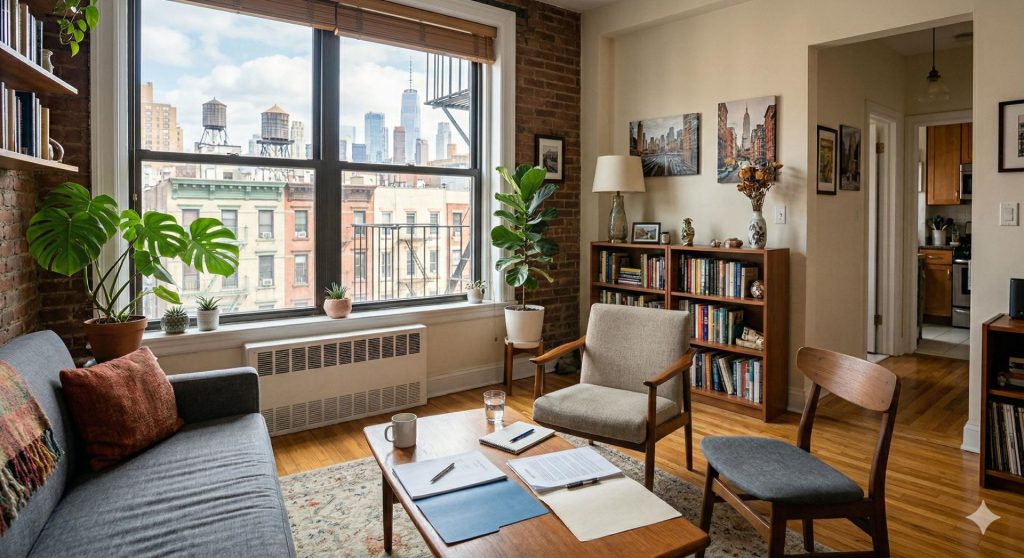
Selling a home with tenants in NYC requires navigating complex regulations to avoid legal issues and ensure a successful sale. Key considerations include understanding rent regulation status, managing lease terms, ensuring tenant cooperation for showings, potential impacts on property value, and properly handling security deposits.
To answer the question, yes you can absolutely sell a property with tenants in New York City. In fact, it happens all the time. But here’s the key: how you sell (with tenants, partially vacant, or fully vacant) can dramatically impact your buyer pool, timeline, and final sale price.
NYC is one of the most tenant-protective markets in the country, and recent laws have made it even more important for owners to understand their options before listing.
Let’s break it down.
Option 1: Sell With Tenants in Place (Investor Buyer Only)
Selling with tenants in place is the most straightforward option operationally, but it comes with tradeoffs.
What Happens When You Sell With Tenants?
- The lease transfers to the new owner
- The new owner becomes the landlord
- The tenant has the right to remain under the existing lease terms
This means:
- You cannot force tenants to leave just because you’re selling
- Buyers must accept the current rent, lease duration, and tenant profile
Pros
- No need to vacate units
- Immediate rental income for the buyer
- Continued rental income for the seller
- Minimal disruption to tenants
Cons
- Buyer pool is limited to investors only
- Lower sale price compared to vacant delivery
- Rent-stabilized or under-market units can significantly reduce value
- Tenants may make showings difficult (though reasonable access is required)
In NYC, tenants are entitled to advance notice before showings, and access must be reasonable and agreed upon. In our experience, when a property owner has very good relationships with their tenants, showing and accessibility is generally pretty smooth. However, we have also seen situations where accessibility is limited and/or showing becomes difficult for one reason or another. Most of the time it is because the tenant(s) become too inconvenienced, or because the owner does not have a great relationship with the tenant(s).
Sign Up for our Newsletters
A monthly roundup of legislation, articles, and resources specifically related to Queens Homeowners and Homebuyers.
Option 2: Deliver One or More Units Vacant (Hybrid Strategy)
This is often the sweet spot for small multifamily properties (2–4 units).
Why This Works
- Opens the property to end users (buyers who want to live in one unit)
- Still retains income-producing units for investor appeal
- Typically results in a higher sale price than fully tenant-occupied
Pros
- Expands buyer pool (investors + end users)
- Better pricing potential
- More flexibility in negotiations
Cons
- Requires coordination with tenants
- May involve legal notices or buyouts
- Timing can be unpredictable
Free Home Valuation
Request a free home valuation from one of our local Queens real estate experts.
Option 3: Deliver the Property Fully Vacant (Maximum Value Strategy)
If your goal is highest possible sale price, delivering the property vacant is usually the best strategy.
Why?
- You unlock the largest buyer pool:
- End users
- Developers
- Investors
- Buyers who want to find and vet their own tenants
- Buyers can immediately:
- Move in
- Renovate
- Reset rents to market
Pros
- Maximum sale price potential
- Full flexibility for buyers
- Easier showings and accessibility
Cons
- Most time-consuming because it requires legally vacating all tenants
- Potential legal costs and delays (if any issues with tenants vacating)
- Loss of rental income during sale
NYC Tenant Protections: What Every Seller Must Understand
New York City has extremely strong tenant protections, and you cannot simply ask tenants to leave because you want to sell.
1. Leases Must Be Honored
If a tenant has a lease:
- You must wait until it expires unless there is legal cause
- The lease transfers to the new owner
2. “Good Cause Eviction” Law (Major Change)
Under NYC’s newer protections:
Landlords generally cannot evict without a valid reason, such as:
- Nonpayment of rent
- Lease violations
- Nuisance or illegal activity
- Owner occupancy (with restrictions)
- Removing the unit from the market
Selling alone is not automatically a valid reason to evict.
Some homes are not covered by the protections under the Good Cause Eviction law. Below are the types of homes where Good Cause Eviction does not apply:
https://www.nyc.gov/site/hpd/services-and-information/good-cause-eviction.page
3. Notice Requirements in NYC
If you are trying to vacate a unit (especially for month-to-month tenants), NYC law requires written notice, and the timeline depends on how long the tenant has lived there:
Typical guidelines under NY law:
- Less than 1 year: 30 days notice
- 1–2 years: 60 days notice
- 2+ years: 90 days notice
⚠️ Important:
- Notice must be formal and written
- It must include a clear termination date
- Improper notice can delay your sale significantly
4. If a Tenant Violates the Lease
You may pursue eviction if the tenant:
- Fails to pay rent
- Violates lease terms
- Creates a nuisance or safety issue
However:
- This requires a legal process through Housing Court
- It is not immediate and can take months
If you are in a situation like this, we would advise that you speak with a tenant landlord attorney who can guide you through the process and avoid any mishaps along the way.
5. If There Is No Lease (Month-to-Month)
You can terminate tenancy with proper notice (30/60/90 days as above), but:
- Tenants still have strong protections
- If they do not leave, you must start a holdover proceeding in Housing Court
6. The Eviction Process in NYC
If a tenant does not vacate:
- Serve proper written notice
- File a case in Housing Court
- Attend court proceedings
- Obtain a judgment
- Marshal enforces eviction
This process can take several months (or much longer) depending on the situation.
7. “Cash for Keys” (Common in NYC)
Because of the complexity of eviction, many landlords choose:
- Negotiating a buyout with tenants
- Offering money in exchange for vacating voluntarily
This is:
- Legal
- Often faster than court
- Widely used in NYC transactions
Key Decision Framework for NYC Sellers
When deciding how to sell, ask yourself:
1. What’s my priority?
- Maximum price → Go vacant
- Speed and simplicity → Sell with tenants
2. What type of tenants do I have?
- Rent-stabilized?
- Below-market rents?
- Cooperative or difficult?
3. How long can I wait?
- Vacating units can take months (or longer)
4. Who is my ideal buyer?
- Investor → Tenants are OK
- End user → Needs vacancy
Selling a property with tenants in NYC is not just a real estate decision, it’s a legal and strategic one.
- Selling with tenants is easiest but limits value
- Selling partially vacant balances price and flexibility.
- Selling fully vacant maximizes value but requires planning
Because of NYC’s tenant protections, the best approach is to:
Plan early
Understand your tenants’ status
Work with experienced professionals
The difference between these strategies can easily mean tens (or hundreds) of thousands of dollars in your final sale price. If you need any help deciding what approach would be best for you, Contact Us anytime 718-968-5538.
